


Your shopping cart is empty!
Aster "Afrodita"
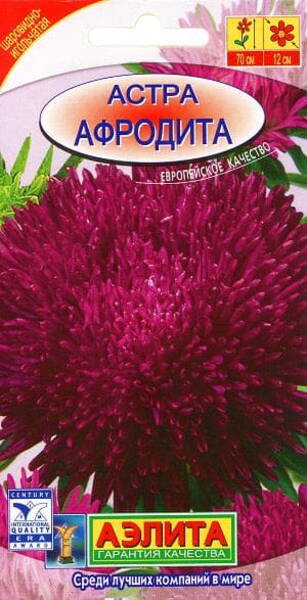
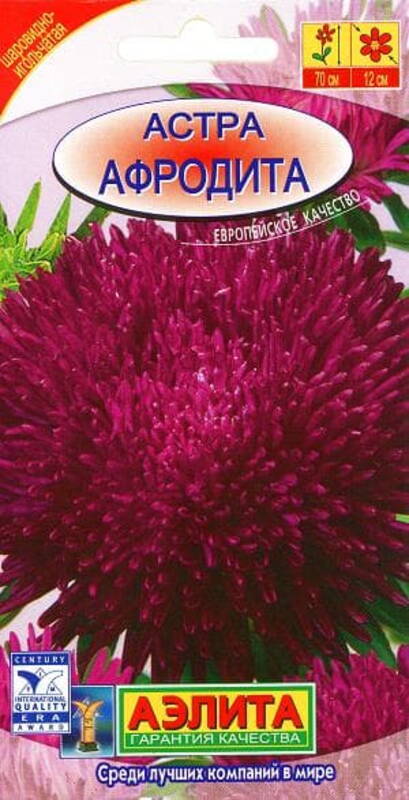
Aster "Aphrodite" - a densely double aster of rich hue.
* Callistephus chinensis - the plant was presumably brought to Europe in 1728 from Beijing. Seeds of a cultivated form were likely sent.
In 1745, forms with double inflorescences already appeared in France. From France, the aster arrived in England in 1752.
The ligulate flowers of wild specimens had blue, carmine, and purple colors, but by the end of the 18th century, forms with white, violet, red, pink, lilac, blue, and purple inflorescences were already found in European gardens.
At the beginning of the 19th century, the Versailles gardener Truffaut bred luxurious double asters of various colors with large round inflorescences. Later, such asters became known as peony-shaped. From the middle of the 19th century, asters gained special love in Germany, where the center of its selection also moved. It was in Germany, starting from the end of the 19th century, that most varieties and garden groups of annual asters were created.
At the end of the 19th - beginning of the 20th century, interest in asters arose in the USA. The varieties bred overseas were distinguished by their tall stature and large, densely double inflorescences. These are the garden groups Californian Giant, Fluffy, American Bush, and American Beauty.
The global assortment of annual asters is huge. Currently, over 300 varieties are offered in the catalogs of various companies alone, and there are many more in collections, over 600.
Early varieties have the shortest period from germination to flowering, only from 83 to 106 days. They bloom as early as July.
Medium varieties: 107-120 days from germination to the beginning of flowering. They bloom in early to mid-August. A large number of varietypes and varieties belong to this group.
Late varieties: the period from germination to the beginning of flowering is over 120 days (121-131 days), they bloom at the end of August - beginning of September.
The duration of flowering in different varieties and varietypes is from 35 to 60 days. The smallest - up to 40 days - is in asters of the Victoria garden groups. Asters American Bush, Waldersee, Dwarf Royal, Peony-shaped bloom for 40-50 days. Anemone asters bloom for more than 50 days: Queen of the Market, Margarita, Petitot, and Edelweiss.
According to the methods of use, asters are distinguished for cutting, planting and universal. Planting - these are dwarf and undersized varieties, they are planted in flower beds. They can be grown in pots and containers and have beautiful flowering plants already in late spring - early summer or late autumn. Most aster varieties are for cutting. They are tall, with long and strong peduncles and large double inflorescences. And finally, a group of universal varieties, with not very large double inflorescences and rather long peduncles, but also with not particularly low and strong appearance.
In terms of richness of colors, aster can compete with gladioli and sweet peas. It has colors white, all shades of pink, from the lightest to the darkest, black-red or dark-carmine. The richness of shades of blue is incredibly rich, from pale blue to dark lilac and dark violet, and lilac, from the lightest to the darkest. There are varieties with cream and yellow inflorescences. There are no orange and green asters yet. But there are two-color ones, with contrasting colors of the tips of the ligulate flowers (for example, the Rosa Turm variety) or with a white longitudinal stripe on colored ligulate flowers (Rainbow, Contraster, Gray Lady).
And one more very important economic feature is the field resistance of varieties to fusarium wilt. Very many varieties have low field resistance to fusarium wilt. Sometimes up to 80% of plants planted in a flower bed or in a garden bed are affected. But there are varieties that are affected by fusarium wilt by no more than 10%, and in favorable years they are not affected by fusarium wilt at all. We call such varieties resistant.
* Callistephus chinensis - the plant was presumably brought to Europe in 1728 from Beijing. Seeds of a cultivated form were likely sent.
In 1745, forms with double inflorescences already appeared in France. From France, the aster arrived in England in 1752.
The ligulate flowers of wild specimens had blue, carmine, and purple colors, but by the end of the 18th century, forms with white, violet, red, pink, lilac, blue, and purple inflorescences were already found in European gardens.
At the beginning of the 19th century, the Versailles gardener Truffaut bred luxurious double asters of various colors with large round inflorescences. Later, such asters became known as peony-shaped. From the middle of the 19th century, asters gained special love in Germany, where the center of its selection also moved. It was in Germany, starting from the end of the 19th century, that most varieties and garden groups of annual asters were created.
At the end of the 19th - beginning of the 20th century, interest in asters arose in the USA. The varieties bred overseas were distinguished by their tall stature and large, densely double inflorescences. These are the garden groups Californian Giant, Fluffy, American Bush, and American Beauty.
The global assortment of annual asters is huge. Currently, over 300 varieties are offered in the catalogs of various companies alone, and there are many more in collections, over 600.
Early varieties have the shortest period from germination to flowering, only from 83 to 106 days. They bloom as early as July.
Medium varieties: 107-120 days from germination to the beginning of flowering. They bloom in early to mid-August. A large number of varietypes and varieties belong to this group.
Late varieties: the period from germination to the beginning of flowering is over 120 days (121-131 days), they bloom at the end of August - beginning of September.
The duration of flowering in different varieties and varietypes is from 35 to 60 days. The smallest - up to 40 days - is in asters of the Victoria garden groups. Asters American Bush, Waldersee, Dwarf Royal, Peony-shaped bloom for 40-50 days. Anemone asters bloom for more than 50 days: Queen of the Market, Margarita, Petitot, and Edelweiss.
According to the methods of use, asters are distinguished for cutting, planting and universal. Planting - these are dwarf and undersized varieties, they are planted in flower beds. They can be grown in pots and containers and have beautiful flowering plants already in late spring - early summer or late autumn. Most aster varieties are for cutting. They are tall, with long and strong peduncles and large double inflorescences. And finally, a group of universal varieties, with not very large double inflorescences and rather long peduncles, but also with not particularly low and strong appearance.
In terms of richness of colors, aster can compete with gladioli and sweet peas. It has colors white, all shades of pink, from the lightest to the darkest, black-red or dark-carmine. The richness of shades of blue is incredibly rich, from pale blue to dark lilac and dark violet, and lilac, from the lightest to the darkest. There are varieties with cream and yellow inflorescences. There are no orange and green asters yet. But there are two-color ones, with contrasting colors of the tips of the ligulate flowers (for example, the Rosa Turm variety) or with a white longitudinal stripe on colored ligulate flowers (Rainbow, Contraster, Gray Lady).
And one more very important economic feature is the field resistance of varieties to fusarium wilt. Very many varieties have low field resistance to fusarium wilt. Sometimes up to 80% of plants planted in a flower bed or in a garden bed are affected. But there are varieties that are affected by fusarium wilt by no more than 10%, and in favorable years they are not affected by fusarium wilt at all. We call such varieties resistant.